BG MUSIC
NATURE
📑 Technical Metadata
Teacher: Title: The Nile River's Indispensable Role in Sustaining Life and Civilization
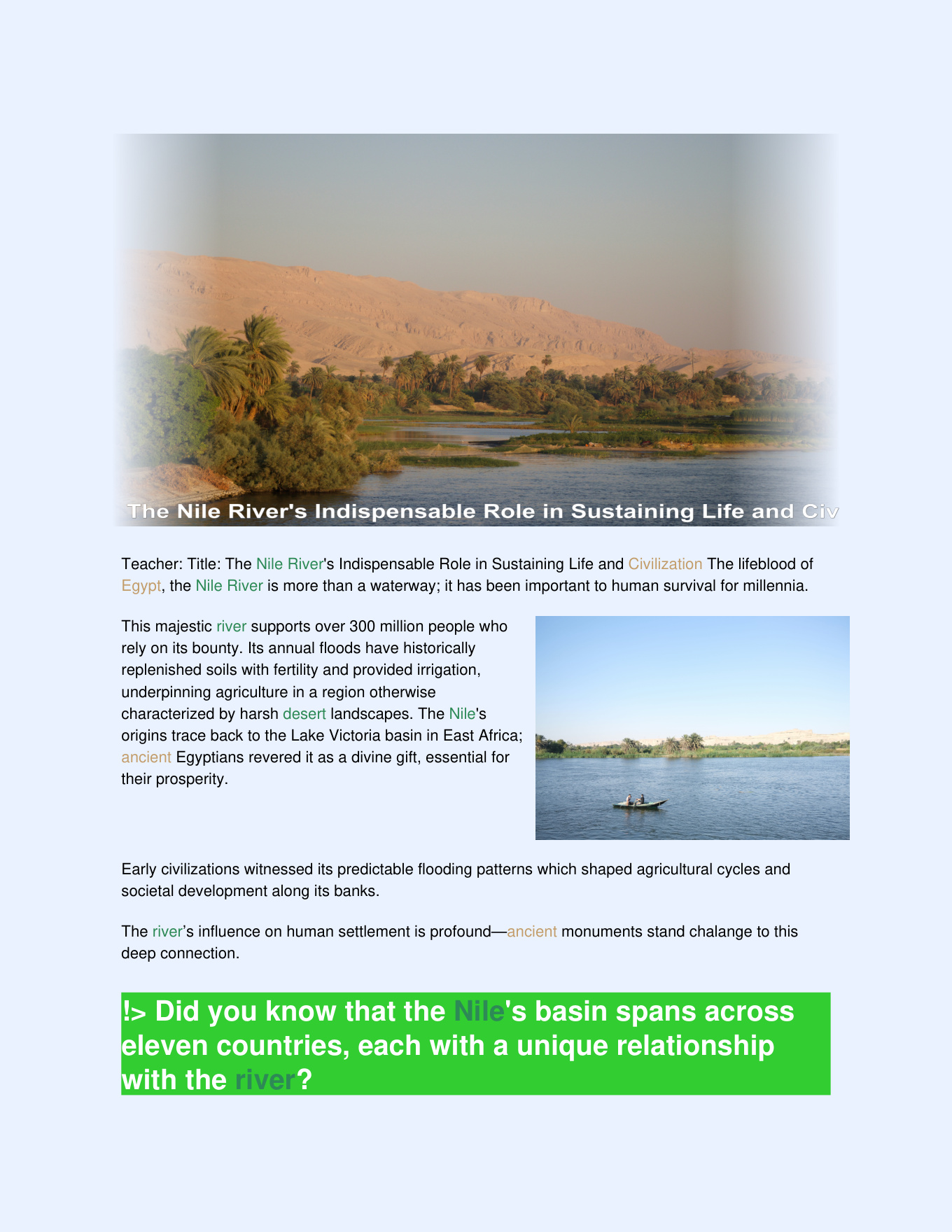
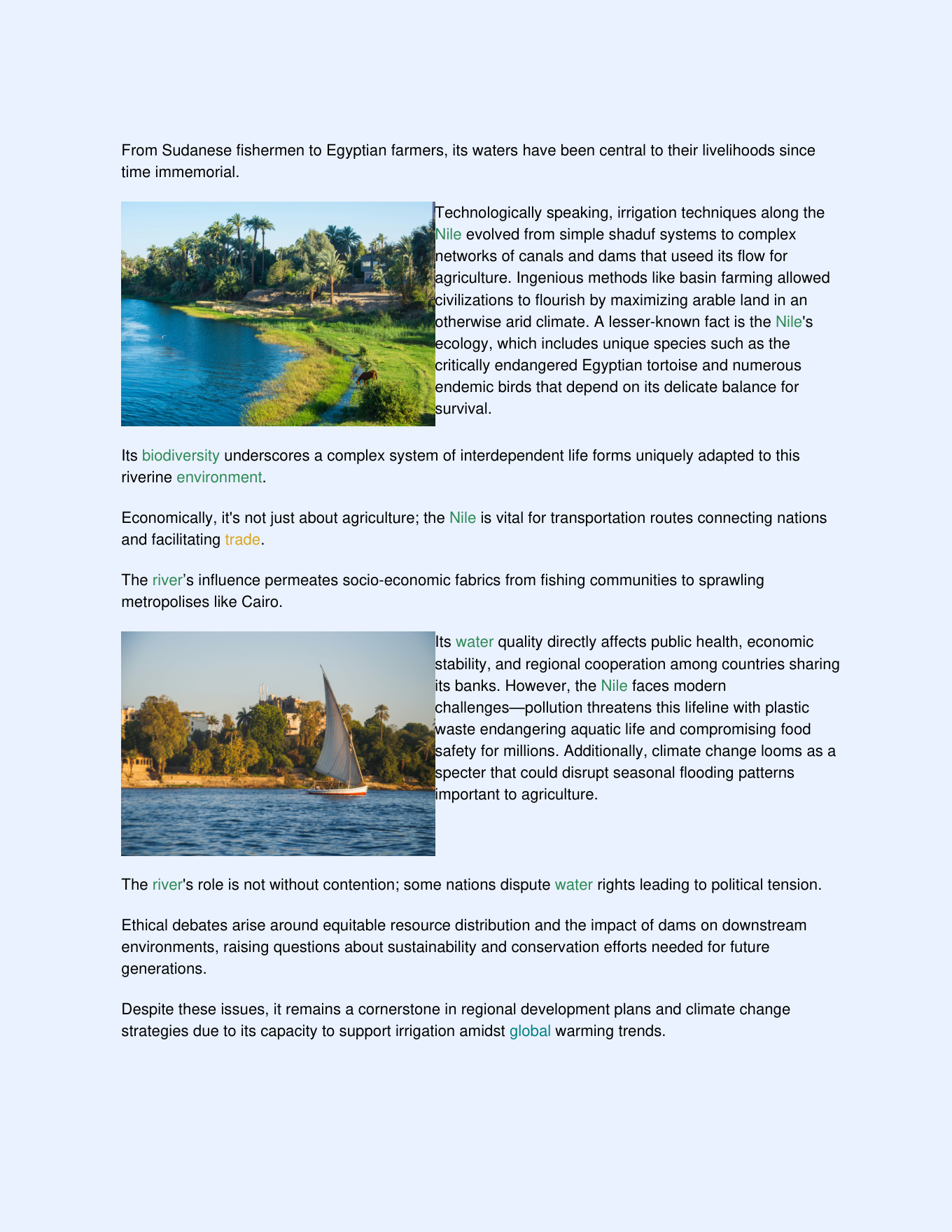
The lifeblood of Egypt, the Nile River is more than a waterway; it has been important to human survival for millennia. This majestic river supports over 300 million people who rely on its bounty. Its annual floods have historically replenished soils with fertility and provided irrigation, underpinning agriculture in a region otherwise characterized by harsh desert landscapes.
The Nile's origins trace back to the Lake Victoria basin in East Africa; ancient Egyptians revered it as a divine gift, essential for their prosperity. Early civilizations witnessed its predictable flooding patterns which shaped agricultural cycles and societal development along its banks. The river’s influence on human settlement is profound—ancient monuments stand chalange to this deep connection.
!> Did you know that the Nile's basin spans across eleven countries, each with a unique relationship with the river? From Sudanese fishermen to Egyptian farmers, its waters have been central to their livelihoods since time immemorial.
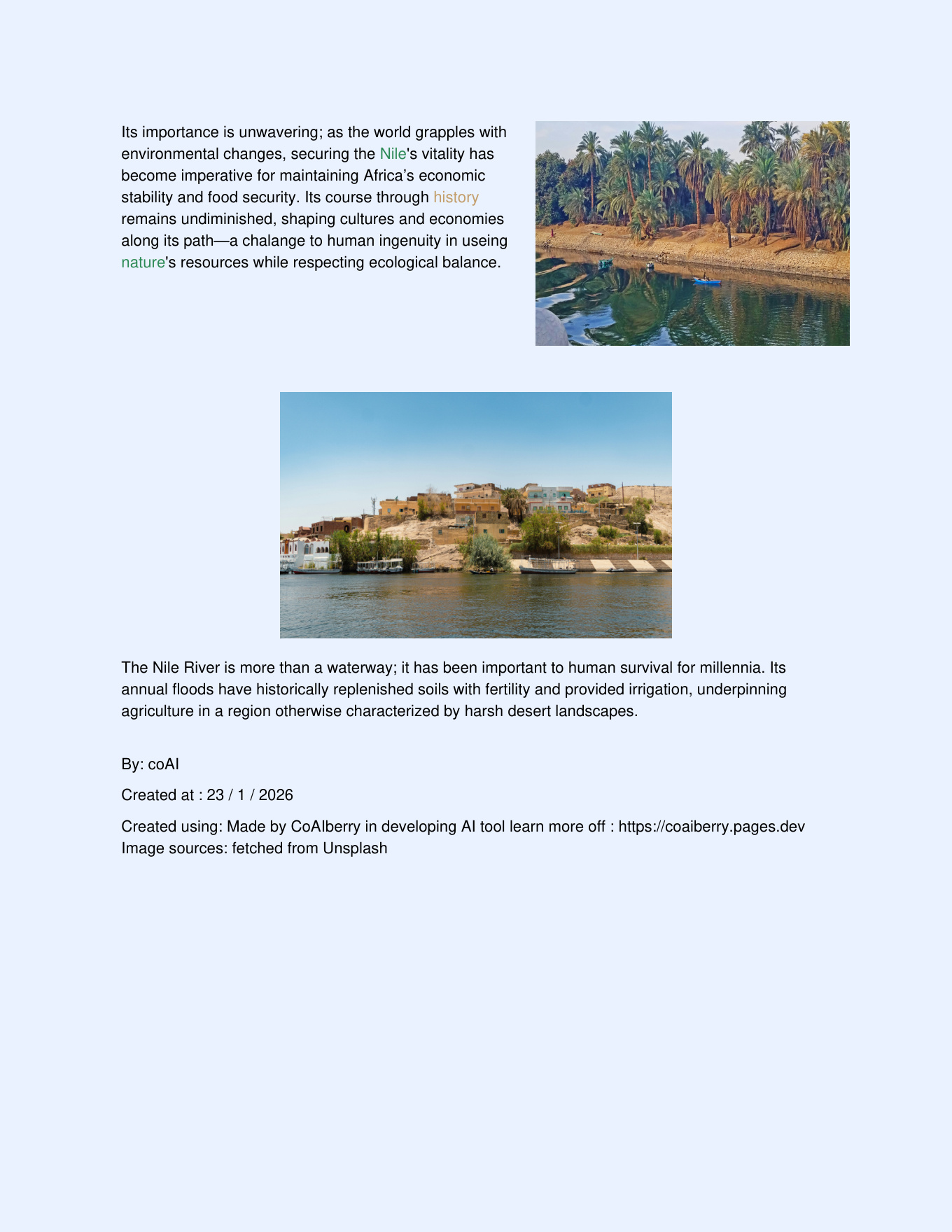
Technologically speaking, irrigation techniques along the Nile evolved from simple shaduf systems to complex networks of canals and dams that useed its flow for agriculture. Ingenious methods like basin farming allowed civilizations to flourish by maximizing arable land in an otherwise arid climate.
A lesser-known fact is the Nile's ecology, which includes unique species such as the critically endangered Egyptian tortoise and numerous endemic birds that depend on its delicate balance for survival. Its biodiversity underscores a complex system of interdependent life forms uniquely adapted to this riverine environment.
Economically, it's not just about agriculture; the Nile is vital for transportation routes connecting nations and facilitating trade. The river’s influence permeates socio-economic fabrics from fishing communities to sprawling metropolises like Cairo. Its water quality directly affects public health, economic stability, and regional cooperation among countries sharing its banks.
However, the Nile faces modern challenges—pollution threatens this lifeline with plastic waste endangering aquatic life and compromising food safety for millions. Additionally, climate change looms as a specter that could disrupt seasonal flooding patterns important to agriculture.
The river's role is not without contention; some nations dispute water rights leading to political tension. Ethical debates arise around equitable resource distribution and the impact of dams on downstream environments, raising questions about sustainability and conservation efforts needed for future generations. Despite these issues, it remains a cornerstone in regional development plans and climate change strategies due to its capacity to support irrigation amidst global warming trends.
Its importance is unwavering; as the world grapples with environmental changes, securing the Nile's vitality has become imperative for maintaining Africa’s economic stability and food security. Its course through history remains undiminished, shaping cultures and economies along its path—a chalange to human ingenuity in useing nature's resources while respecting ecological balance.